People and workplace rules
Helmet and reflective vest, smoking and phone use, off-post behavior, and e-bike access.
Existing CCTV. Local AI. Open integration.
Deploy edge AI boxes, AI cameras, NVRs, and custom detection models to turn ordinary camera streams into real-time alerts for PPE, smoke, intrusion, unsafe behavior, and process risks. Selected ambiguous alarms can also receive optional multimodal AI verification using event evidence and scene context.
Product stack
Start with one camera stream, then scale to multi-channel edge boxes, NVR-based management, or GPU servers for larger deployments.
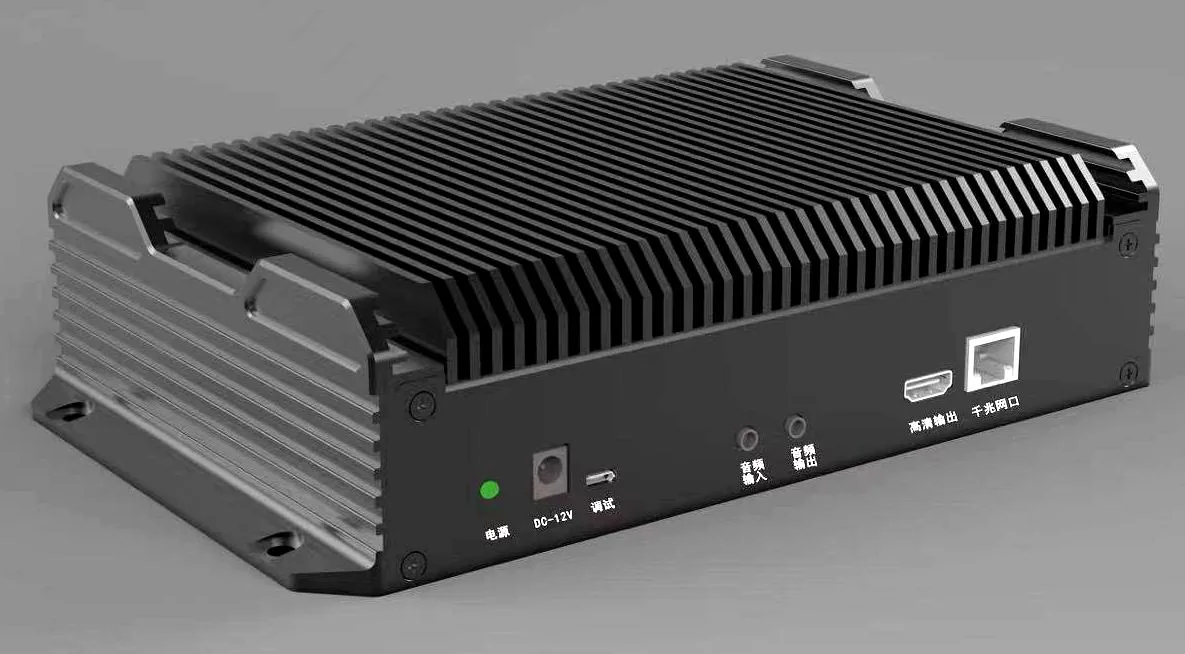
Existing CCTV AI upgrade
2, 8 and 16-channel NPU edge boxes and a 32-channel GPU video analytics server for upgrading existing RTSP and ONVIF CCTV systems with local detection, snapshots, event records, and platform integration.
Front-end AI camera
8MP edge AI camera with an 8-core CPU and 3TOPS INT8 NPU for local multi-algorithm video analysis, alarm evidence, and custom model deployment.
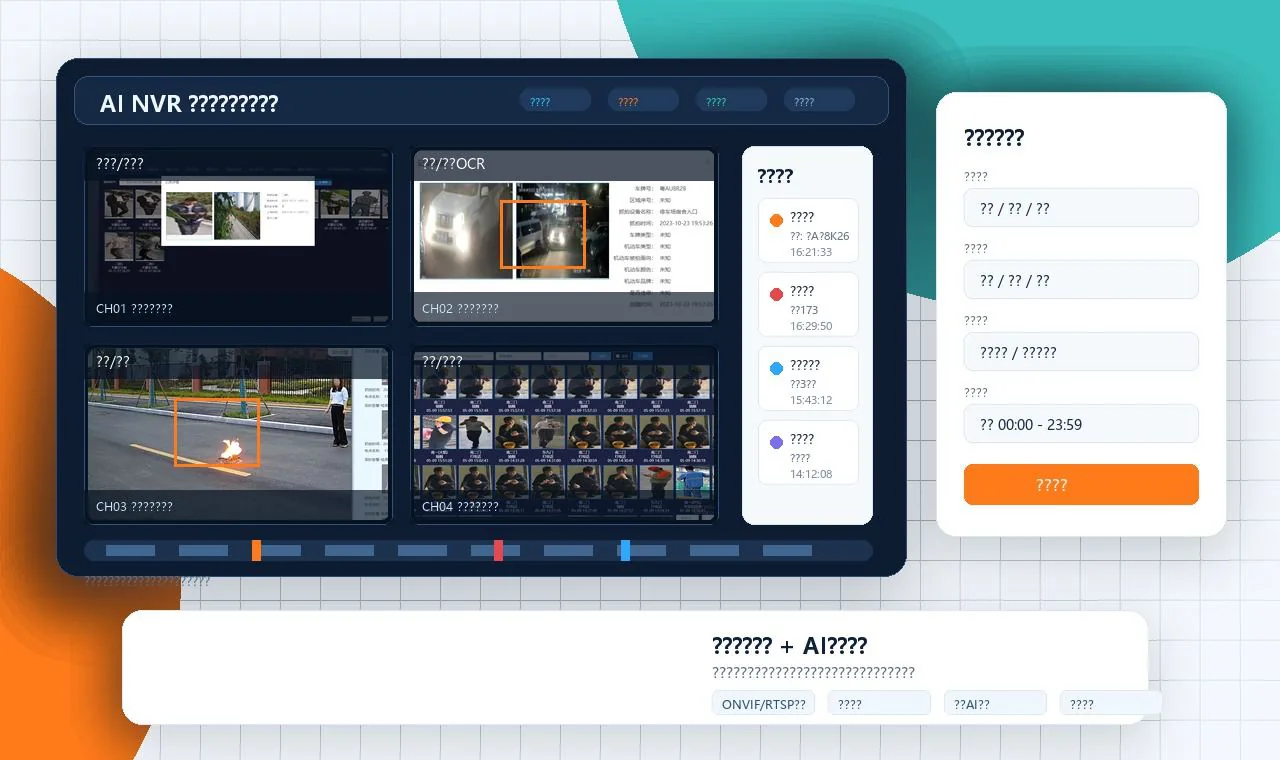
Smart recording and event search
AI-powered NVR for local recording, false-alarm filtering, perimeter protection, intelligent search, event evidence, and ONVIF/RTSP camera compatibility.
Use cases
Xinhuo systems are built for industrial camera scenes: busy entrances, high-risk production lines, construction zones, yards, warehouses, and perimeter areas.
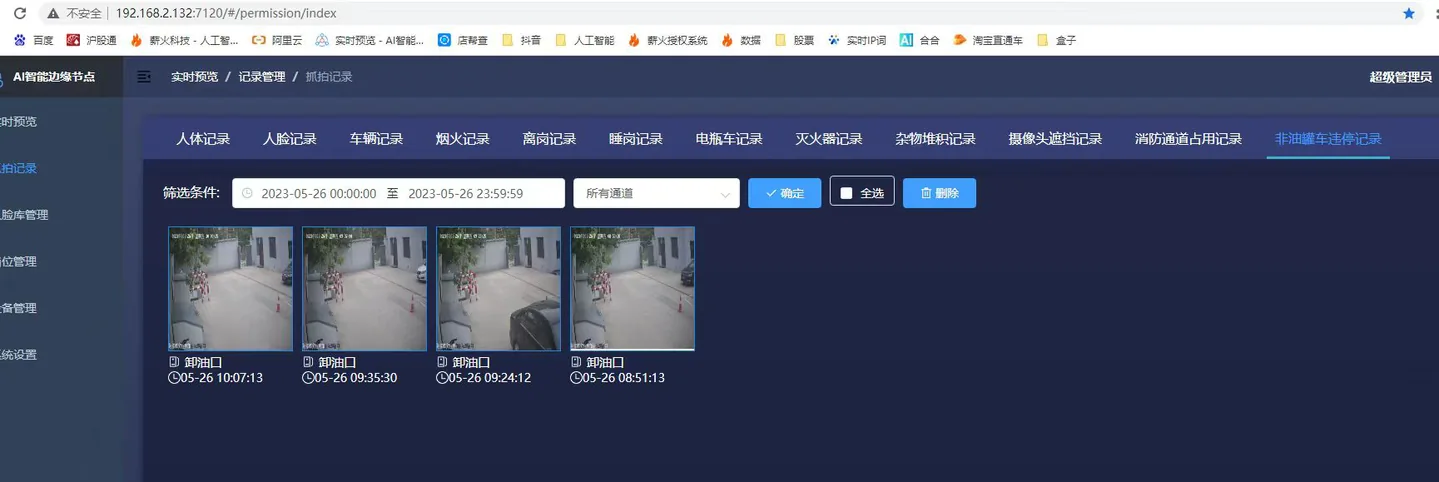
AI video analytics for gas stations: smoking, phone use, smoke/fire, unloading-area vehicle exceptions, static discharge signage, fire extinguisher presence, and local edge deployment.
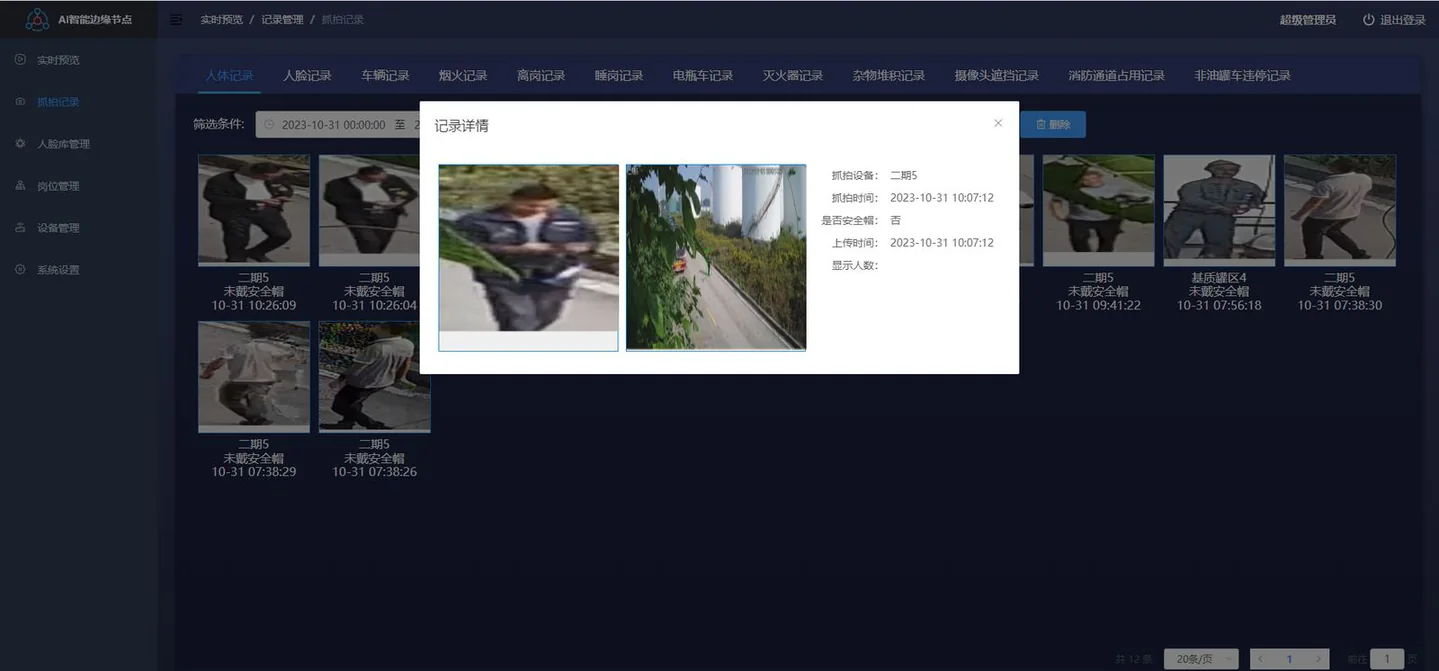
AI video analytics for factory safety production: helmet, reflective vest, smoking, phone use, off-post/sleeping-on-duty, intrusion, smoke/fire, and fire lane occupation detection.
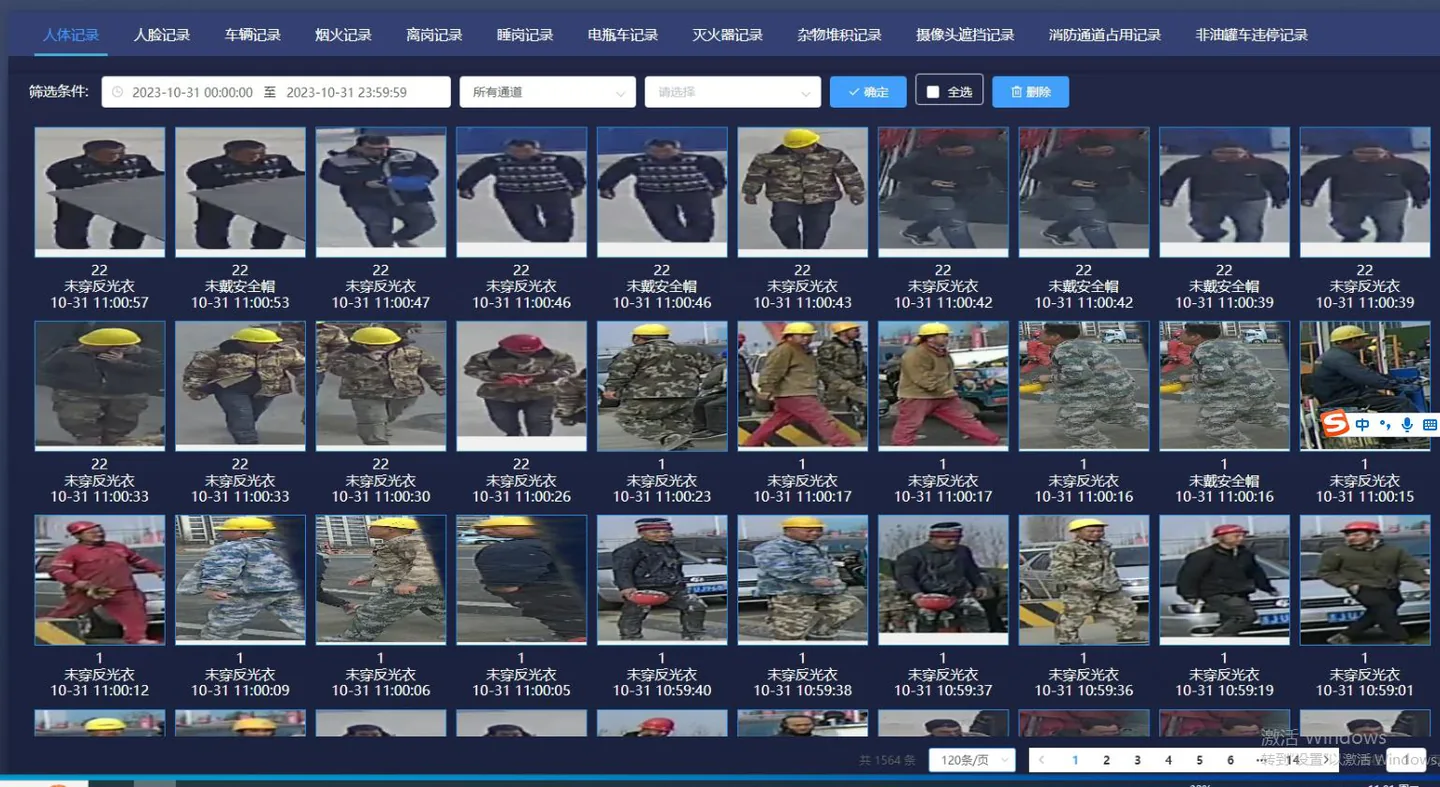
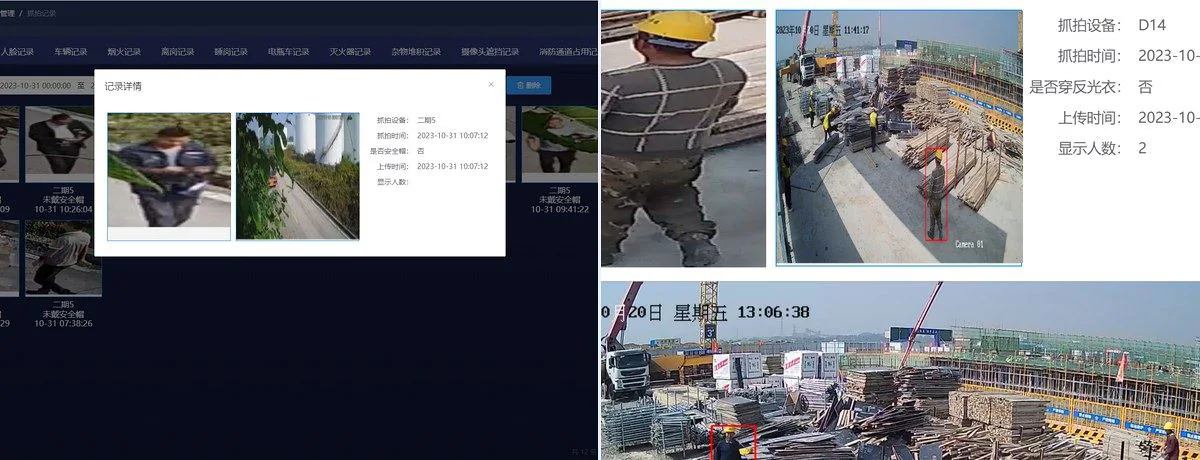
AI video analytics for construction sites: helmet, reflective vest, smoke/fire, vehicle, area intrusion, personnel gathering, and channel occupation detection.
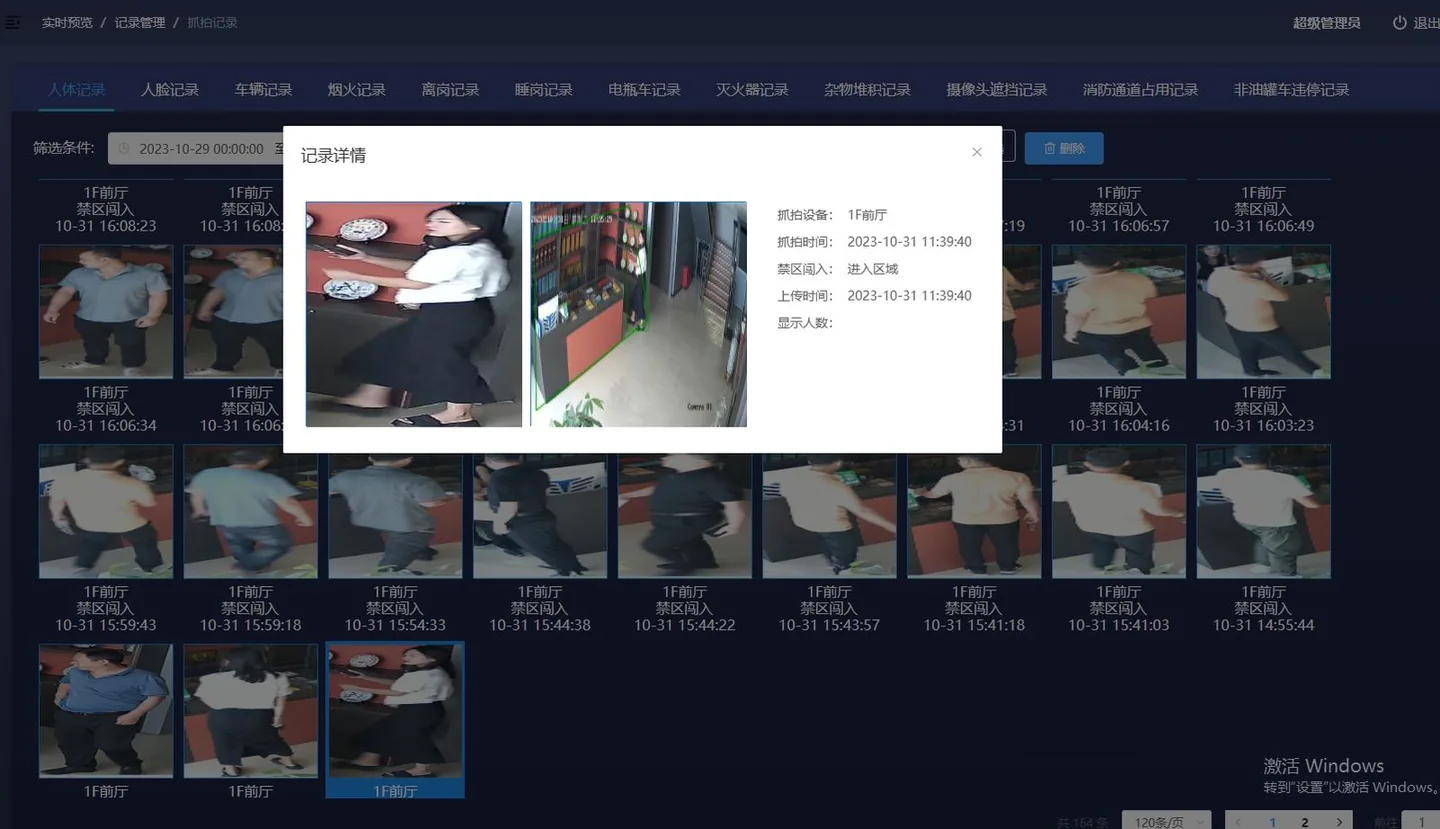
AI solution for parks, campuses, communities, and warehouses: perimeter intrusion, line crossing, loitering, vehicle parking, fire lane occupation, license plate recognition, and event search.
Analytics library
Algorithms can be combined with camera regions, direction, dwell time, schedules, and escalation rules. The deployment starts with the situations site teams actually need to review.
Helmet and reflective vest, smoking and phone use, off-post behavior, and e-bike access.
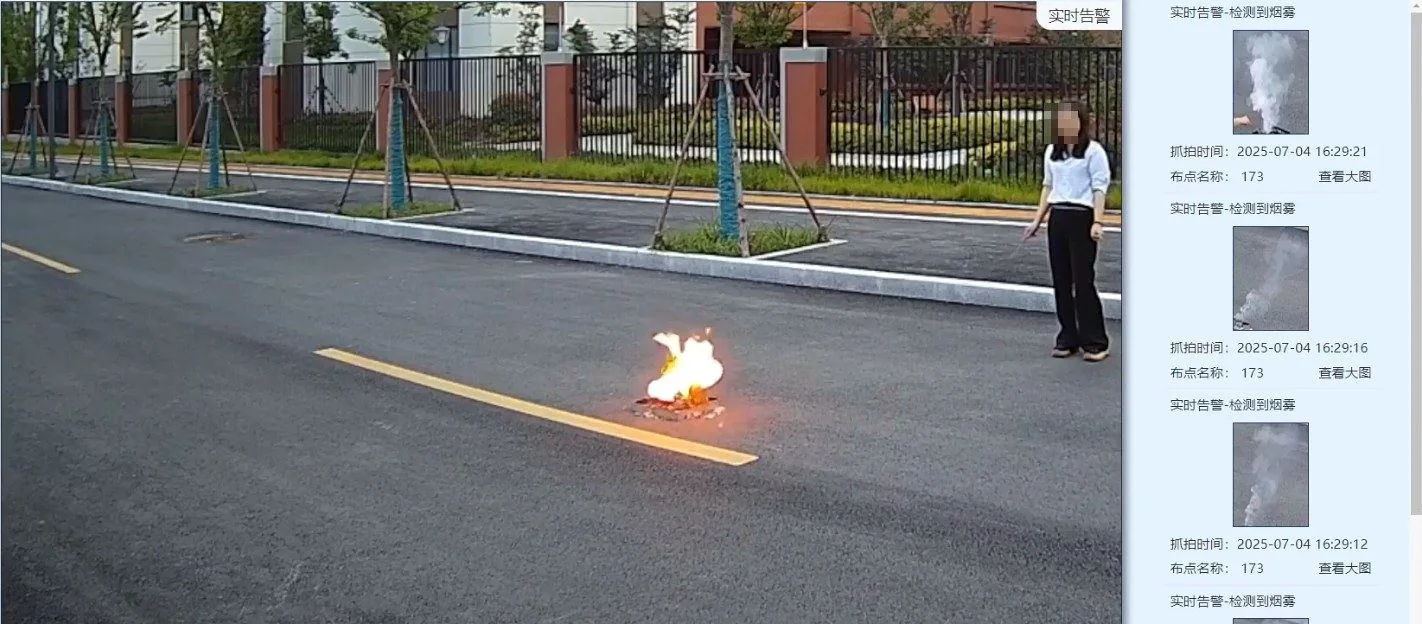
Smoke and flame, access-route occupation, camera availability, visible equipment state, and conveyor risks.
Intrusion and line crossing, vehicle and plate events, and custom model training for site-specific objects or actions.
Deployment route
Use local AI where the video is produced, then retain searchable event evidence for the people who need to act.
Use existing RTSP or ONVIF streams where they are available, or select front-end AI cameras for new points.
Set the zone, time, direction, target, and escalation logic for each camera point.
Keep snapshots, recordings, and event records together for investigation and operational reporting.
Multimodal alarm verification
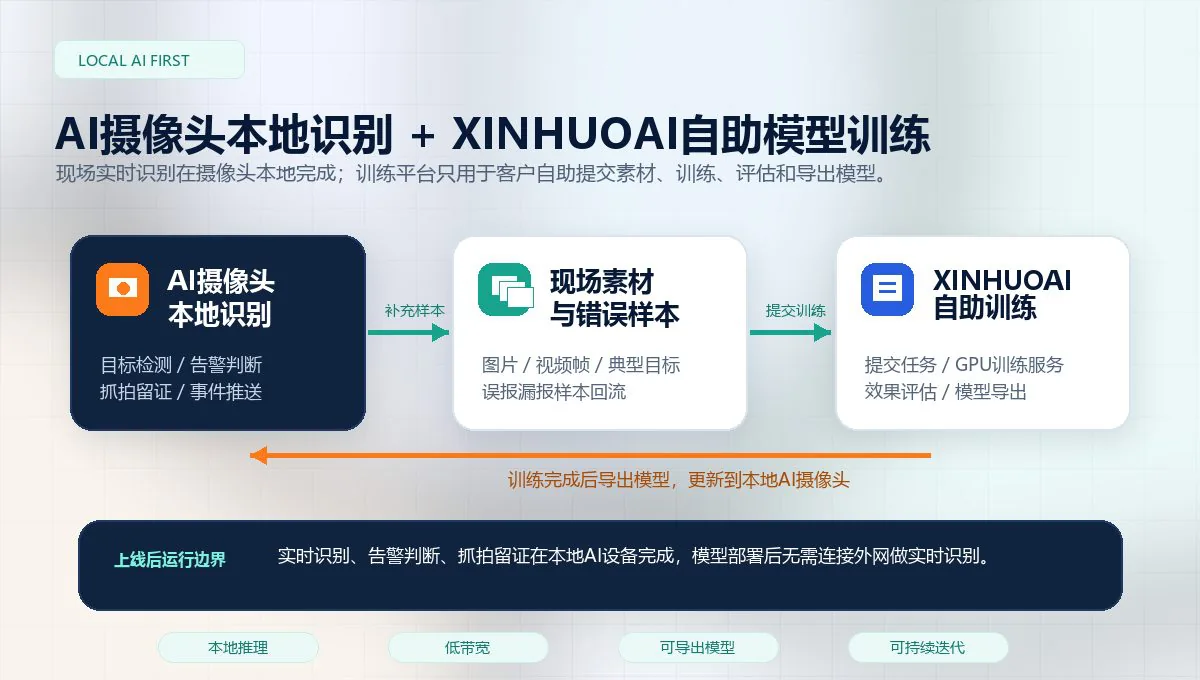
AI cameras, edge boxes, and AI NVRs continue to screen video locally. When an event is uncertain or needs more context, the system can send a selected event image, full-scene image, time, region, and configured rule for a second review. This helps project teams prioritize alerts and retain clearer evidence for follow-up.
Use the deployed camera or edge device for continuous detection and initial event capture.
Pass selected images with the site rule, zone, time, and event type that explain why the alarm was raised.
Use the result to rank alerts, request human review, label possible false alarms, or feed representative samples back into improvement work.
Proof points
Each deployment can be shaped around existing devices, local compliance needs, and the events that matter most to the site team.
Industrial manufacturing site
A practical factory deployment pattern for adding helmet and reflective vest detection to existing camera streams.
Keep existing cameras and add local AI event generation.Gas station or hazardous-area operator
A deployment pattern for detecting smoking, phone use, smoke/fire, and vehicle events in high-risk zones.
Configure local AI alarms at high-risk camera points.Common questions
Practical answers for project owners, system integrators, and operations teams comparing local CCTV analytics options.
XINHUO AI provides on-premise AI video analytics hardware and software for existing CCTV systems, including AI edge boxes, AI cameras, AI NVRs, analytics servers, and custom model training.
Yes. The AI edge box and server products can connect to existing RTSP and ONVIF camera streams, so many projects can add AI detection without replacing the current CCTV infrastructure.
Typical events include helmet and reflective vest detection, smoke and flame detection, intrusion and line crossing, smoking or phone-use detection, vehicle parking events, license plate events, and custom object detection.
The recommended industrial deployment runs AI inference locally. Customers can keep video inside their own network and send only event metadata, snapshots, or alarms to their management platform.
Industrial video analytics topics
Practical pages covering unloading areas, warehouse traffic, kitchen hygiene, fire routes, vehicle rules, ground conditions, remote cameras, and alarm review.
Solution
Tank-truck presence, visible preparation items, unloading-zone rules, event evidence, and fire-risk events.
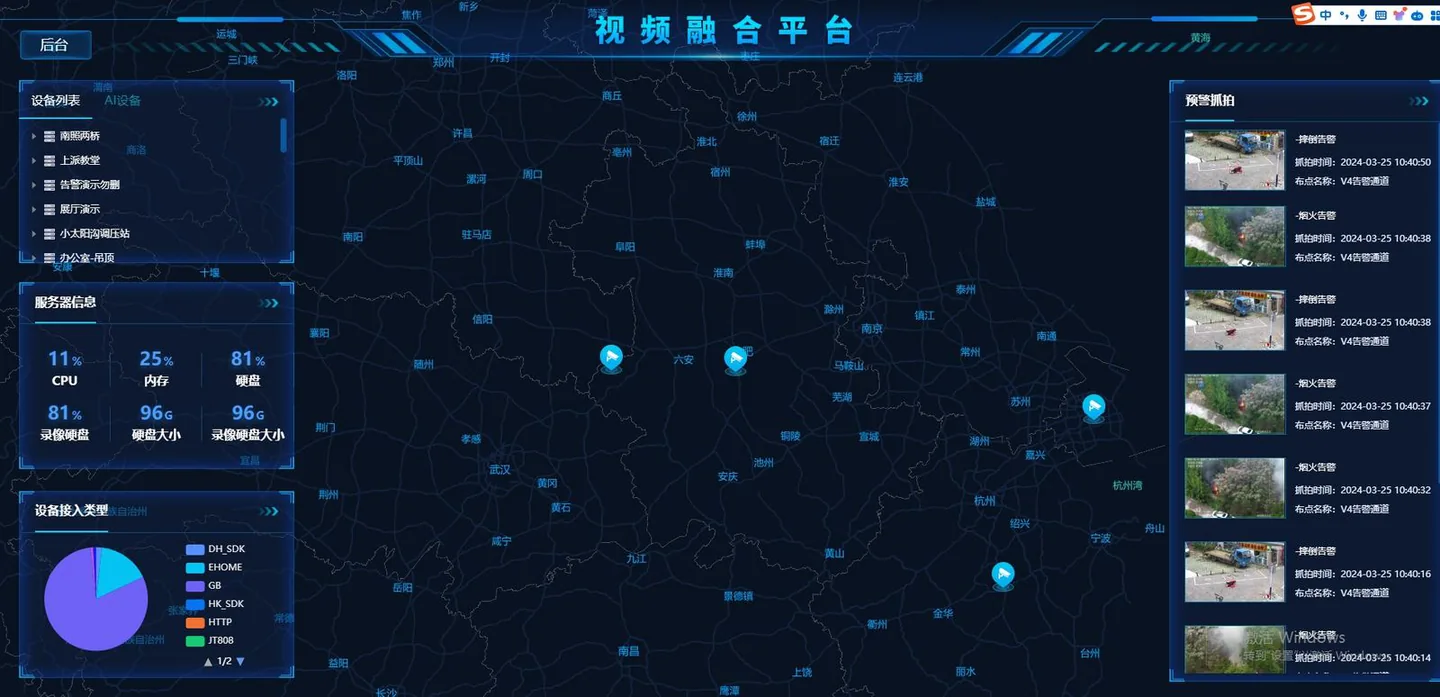
Solution
Camera rules for mixed traffic, crossings, controlled areas, loading zones, and reviewable forklift events.
Solution
Visible staff attire, smoking, rodents, fire-risk events, and defined kitchen-area checks.
Solution
Visible extinguisher presence, access-route occupation, smoke or flame, and camera-availability checks.
Algorithm
Read direction, controlled areas, abnormal stay, site traffic rules, and optional plate association.
Algorithm
Visible water, oil, potholes, obstructions, access-route conditions, and camera coverage limits.
Aug 22, 2026
A guide for distributed points where video access, broadband, and continuous video transfer cannot be assumed.
Aug 22, 2026
How image, full-scene, time, and rule context can support the review of uncertain video events.
Project inquiry
Tell us the camera count, the events to detect and the project location. Our team will reply by email with the relevant product information and next steps.