Published: 2026-08-26 | English reference version of the Chinese source article.
A completed mobile patrol deployment in Chile
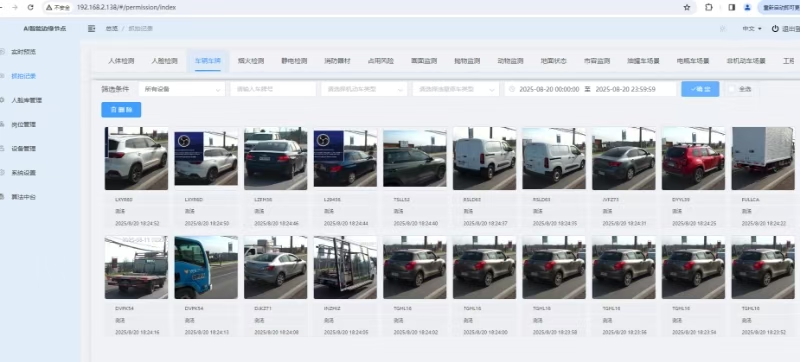
A government-led road patrol project in Chile has been deployed and delivered by XINHUO AI at scale. The system identifies passing vehicles and ordinary passenger-car plates, captures vehicle and plate images, and sends the recognized plate, capture time and related evidence to a central display platform.
The project is built for mobile patrol work rather than a fixed toll gate. The patrol vehicle moves, the camera angle changes, and the background changes with every road section. Traffic speed, backlight, night lighting, rain, haze and the number of plate pixels in an image all affect the result. The useful output is a searchable event record, not a long clip that someone must review frame by frame.
What the patrol workflow records
When a vehicle enters the usable image area, the system finds the vehicle, locates the plate area, reads the characters and preserves a full vehicle image together with a plate crop. The resulting record can include the recognized plate, capture time, device identifier and available location fields.
The central platform can search by time, device or plate number and open the matching vehicle and plate images for review. Existing business platforms can receive events through HTTP, MQTT or an agreed integration interface. Field names, delivery frequency and image-retention rules need to match the receiving platform before deployment.
The same recognition software can be deployed in different forms
The recognition capability is shared software. An AI camera suits new or distributed points where vehicle detection, plate recognition and capture should happen at the camera. It can send event data over 4G, a private network or another available connection when a roadside cabinet is impractical.
An AI Edge Box suits existing network cameras that expose local RTSP, ONVIF or NVR streams. It can analyze several channels at the site and send structured records to the centre. AI NVRs and video analytics servers suit projects that need many channels, long-term search or central management across several sites.
Plate format and camera conditions still matter
A licence plate model does not remove the need for a site survey. Plate size in pixels, vehicle speed, camera height, viewing angle, exposure, backlight and night illumination all influence recognition stability. The Chile deployment validates ordinary passenger-car plates on the project roads.
Construction vehicles, special-purpose vehicles, double-layer plates, badly contaminated plates and other local plate forms need testing with local video and local samples. The same applies to projects in Latin America, Asia, Africa, North America and other markets, where plate layouts, character sets, colours and reflective materials differ.
A practical approach for unstable road networks
Where road connectivity is unstable, the front-end device can keep recognition and event evidence locally, then synchronize the records when connectivity returns. The project team should decide in advance whether the central platform receives images, structured events or both, and how retries and duplicate records are handled.
For a new country or plate type, XINHUO AI starts with representative road video and capture samples. The model, camera placement and data interface are reviewed together. That work is needed before a pilot is scaled into a road network.